


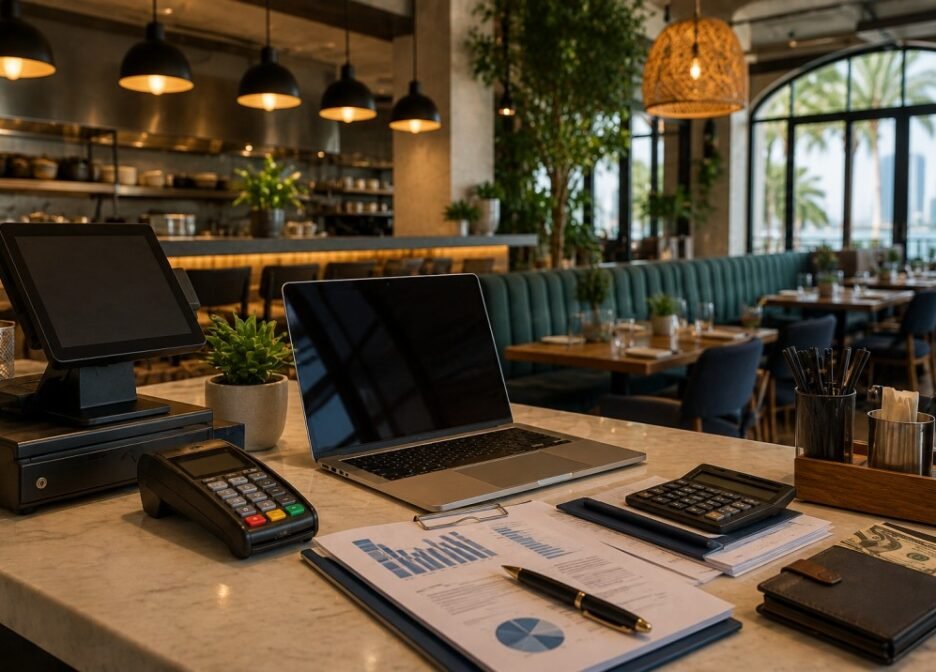
Opening a restaurant or café in the UAE is exciting, until you hit the bank account application and realize F&B businesses get treated differently than most other industries.
Cash heavy operations, tight margins, high staff turnover, multiple suppliers, all of it adds up to a business type that banks look at a little more closely. If you’re planning to open or already running a food and beverage business, here’s what you actually need to know.
Banks assess risk industry by industry, and food and beverage tends to land in a category that needs more explaining. A few reasons why:
Heavy cash handling. Cash based revenue is harder to trace and easier to misreport, which makes compliance teams pay closer attention.
High transaction volume, low average value. Lots of small transactions can look unusual compared to a business with fewer, larger payments.
Frequent supplier and payroll payments. F&B businesses often pay dozens of suppliers and staff regularly, which banks want to see clearly documented.
Franchise and licensing structures. If you’re running a franchise, banks will want to understand royalty payments, brand agreements, and any overseas fund transfers tied to the franchise.
None of this means your café is under suspicion, it just means the bank needs a clearer picture of how money moves through your business before they’re comfortable.
On top of the standard company documents, F&B businesses should be ready with:
Trade license specific to your F&B activity (restaurant, café, catering, etc.)
Food safety / municipality approvals where applicable
Lease agreement for your physical location
A clear breakdown of expected daily/monthly cash vs. card revenue
Supplier and payroll payment estimates
Franchise agreement, if relevant, including royalty and payment terms
POS system details, if you already have one set up
That cash vs. card revenue estimate is worth preparing carefully. Banks want a realistic picture, not a guess. If you can show projected numbers with some logic behind them, seating capacity, average ticket size, expected footfall , it builds confidence fast.
Not every bank has the same appetite for food and beverage clients. Some banks are genuinely comfortable with cash heavy businesses and have streamlined processes for it. Others avoid F&B almost entirely because of the compliance workload involved.
Before you apply, it’s worth checking:
Does the bank actively work with restaurants and cafés already?
Do they offer merchant services (POS, card payment integration) alongside the business account?
What are their cash deposit limits and fees, this matters a lot for cash heavy operations?
Do they have experience with franchise based F&B businesses, if that applies to you?
Picking the wrong bank here doesn’t just risk a slow approval, it can mean ongoing friction every time you deposit cash or process a large batch of card settlements.
Cash deposit limits and fees
Some banks cap how much cash you can deposit before charging extra fees or requiring additional documentation. If you’re running a busy café with daily cash takings, this can eat into margins if you don’t check it upfront.
Card settlement delays
POS providers and banks don’t always move card payments through instantly. Ask exactly how long settlement takes , a few days’ difference matters a lot for cash flow in a low margin business.
Account freezes over transaction patterns
This one catches people off guard. If your transaction pattern suddenly changes , a big spike in cash deposits, an unusual international transfer, a new supplier pays a large sum, some banks will freeze the account first and ask questions later. Keeping your bank informed of major changes in advance can prevent this.
Franchise royalty transfers
Sending regular royalty payments overseas can trigger compliance reviews if the bank doesn’t have clear documentation of the franchise agreement on file from the start.
Be upfront about your cash volume. Trying to downplay it doesn’t help, banks will see the real numbers eventually anyway.
Get merchant services sorted early. Applying for a POS/card payment facility alongside your bank account, rather than afterward, often speeds things up.
Keep supplier and payroll records clean from day one. This makes it easy to explain your transaction patterns if the bank ever asks.
Flag major changes proactively. New supplier, new location, big spike in sales , a quick heads up to your bank can prevent an unnecessary freeze later.
Running an F&B business in the UAE is demanding enough without banking friction slowing you down. The businesses that avoid delays are the ones that walk in prepared , clear numbers, clean documentation, and a bank that actually understands the F&B industry rather than treating every cash deposit as a red flag.
If you’d rather skip the trial and error, we help restaurant and café owners find banks that genuinely work with F&B businesses at Alahdaf Banking , from the right account type to merchant services that fit how your business actually runs.
Get the banking side right early, and you can spend your energy on the part that actually matters: running a great restaurant.
1. Why do restaurants and cafés face more scrutiny than other businesses when opening accounts?
Mainly because of high cash volume and frequent, low value transactions , patterns that are harder for banks to trace and verify compared to businesses with fewer, larger payments. It’s a compliance concern, not a reflection on your specific business.
2. What’s a normal cash deposit limit for an F&B business account?
It varies significantly by bank, and some charge extra fees once you exceed a set monthly cash deposit threshold. Always ask for the specific limit and fee structure before choosing a bank, this can meaningfully affect your margins if you’re cash heavy.
3. Do I need a separate merchant account for card payments, or does my bank account cover that?
You’ll typically need a merchant services facility (POS integration) in addition to your business bank account. Some banks bundle both together; others require you to set them up separately, sometimes even through different providers.
4. Can my restaurant’s bank account get frozen without warning?
It can happen if your transaction pattern suddenly changes in a way that looks unusual , a spike in cash deposits, a large new supplier payment, or an unexplained international transfer. Keeping your bank informed of major operational changes in advance reduces this risk.
5. How long does card payment settlement usually take for restaurants?
It depends on your POS provider and bank, but it’s rarely instant, often a few business days. Ask upfront since slower settlement can create real cash flow pressure in a low margin business.
6. Do franchise restaurants face different banking requirements?
Yes. Banks will want to see your franchise agreement, understand royalty payment terms, and review any recurring international transfers tied to the franchise. Having this documentation ready from the start avoids delays later.
7. Can a new restaurant with no trading history get a business bank account?
Yes, but expect closer scrutiny and possibly a longer approval process, since the bank has no transaction history to assess. Having a clear business plan, realistic revenue projections, and complete documentation helps offset the lack of track record.